
Direct Answer
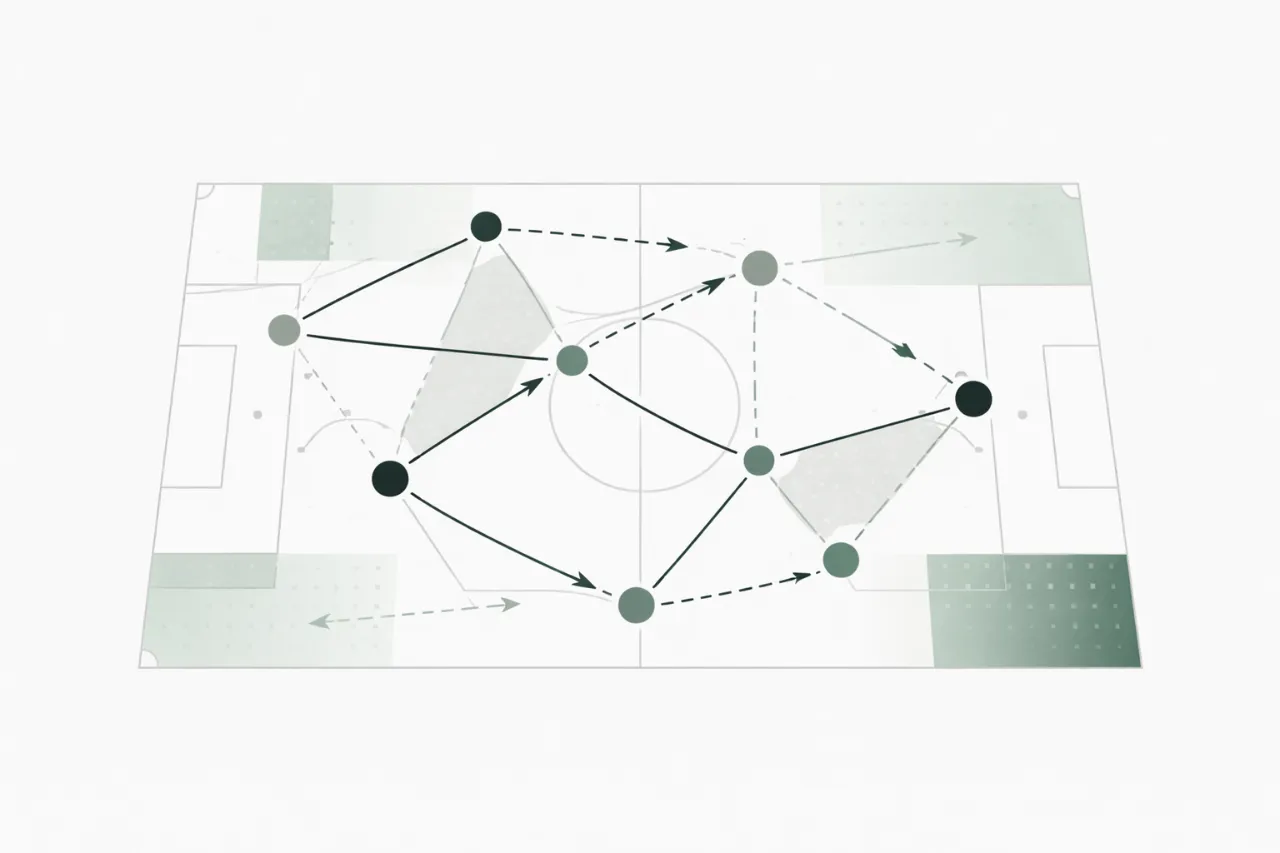
To dominate possession in Football Manager you need structure, spacing and intelligent roles, not endless short passes. Possession dominance comes from controlling space, making good decisions under pressure and keeping a stable shape both in and out of possession.
Why Possession Is Often Misunderstood
Many players think dominating possession means setting very short passing, lowering tempo and keeping the ball at all costs. If you’ve tried this, you’ve probably seen sterile possession, no clear chances and sudden counter-attacks.
In Football Manager, possession is a by-product of good structure, not a goal on its own. When possession fails, it’s usually because the system lacks balance, an issue already explained in Why Your Tactic Stops Working in Football Manager
Possession Starts With Team Shape
Before touching any instruction, your shape must make sense.
A possession-oriented team needs:
-
Passing options in all zones
-
Short distances between players
-
Defensive cover behind the ball
-
Clear build-up lanes
If players are too far apart, even elite passers will lose the ball under pressure. This links directly to how the match engine evaluates positioning, as explained in How Football Manager Match Engine Works
Roles Matter More Than Passing Style
One of the biggest mistakes is focusing on team instructions while ignoring roles.
To dominate possession:
-
Use support roles to create passing triangles
-
Limit pure attacking duties
-
Avoid playmakers with poor decisions
-
Ensure midfielders offer themselves consistently
A technically strong player without the right mental attributes will slow circulation and invite pressure. This is why understanding How Attributes Affect Performance in Football Manager is essential before committing to possession football.
Tempo and Risk Control
Possession football does not mean slow football.
What usually works best:
-
Normal or slightly lower tempo
-
Balanced or positive mentality
-
Selective risk, not constant safety
Too low a tempo allows opponents to reset their defensive block. Too much risk leads to turnovers. Finding the middle ground is key to sustained control.
This balance is part of what defines a stable system, as discussed in How to Create a Balanced Tactic in Football Manager
Width Creates Space, Not Just Crosses
Width is essential to possession dominance, but not for spamming crosses.
Proper width:
-
Stretches defensive lines
-
Creates central passing lanes
-
Opens half-spaces
Wide players should contribute to circulation, not isolate themselves. This is especially important against deep defences, a problem analysed in How to Beat Low Block Teams in Football Manager
Pressing Supports Possession
Good possession teams win the ball back quickly.
After losing possession:
-
Immediate pressure prevents counters
-
Compact shape recovers second balls
-
Opponents are forced into rushed clearances
This doesn’t require extreme pressing. As explained in How Pressing Really Works in Football Manager pressing must match squad quality and stamina.
Common Mistakes That Kill Possession
Some recurring errors include:
-
Using too many attacking duties
-
Forcing short passing with low composure players
-
Ignoring defensive cover
-
Overusing playmakers
-
Confusing possession with safety
These mistakes usually lead to high possession numbers but poor control.
Practical Rules to Dominate Possession
To improve possession consistently:
-
Build structure before instructions
-
Use roles that support circulation
-
Control tempo instead of forcing it
-
Keep players close to each other
-
Protect against transitions
Possession dominance improves naturally when these fundamentals are respected.
Conclusion
Dominating possession in Football Manager isn’t about hoarding the ball. It’s about controlling space, decisions and tempo. When structure and roles are right, possession becomes purposeful instead of sterile.
If you want possession football to work long term, focus on balance and suitability rather than extreme instructions. For a complete tactical foundation, explore the Tactics section and the Football Manager Guides starting from the FootballManagerGuru homepage.